
However, the CBI, objected saying the Commission report cannot be used by the convicts for defence.
Earlier, Yakub, while giving a statement on quantum of punishment after his conviction, had raised the same issue saying those indicted by Srikrishna Commission of Inquiry probing the 1992-93 Mumbai riots, should be punished.
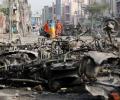
The Supreme Court on Tuesday asked the Maharashtra government to apprise it about whether compensation has been paid to the legal heirs of 168 people, who were stated to have gone missing during the 1992-93 communal riots in Mumbai.
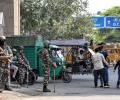
'It wasn't as if the senior police inspectors in charge of the police stations were not aware of the communal tension that was being created in their areas before and during the riots.' 'Yet they chose not to act,' recalls Jyoti Punwani.
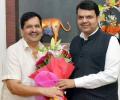
The Election Commission sent a notice to Mangal Prabhat Lodha, the BJP's Mumbai chief. This is probably because a leading newspaper highlighted his utterances on its front page.

The Sessions Court judge presiding over the trial was appointed to this court just a few months ago. Annoyed at its slow pace, he is cracking the whip on the prosecution.
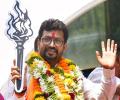
'We can't sit back clutching our memories of the riots. The country, the future of our children are more important.' Jyoti Punwani reports on an unusual election meeting in Mumbai.

'No one talks about the Mumbai riots anymore, though like Delhi 1984, the guilty have not been punished. In Gujarat, many powerful leaders of the state's ruling party are in jail for their role in the riots... In Mumbai, only one politician of the Shiv Sena, a former MP, was convicted of hate speech, along with two other Shiv Sainiks, one of whom was a corporator and the other a junior functionary... So why the apathy? Could it be because despite these statistics and the widely-publicised findings of the Srikrishna Commission, what remained in public consciousness was the violence by the Muslims, thanks to a highly efficient Sena propaganda machine? There's no demand for it, but would an SIT probe into the closed cases of the Mumbai riots help today?' The fadeout of Mumbai's riots from public debate can be called a triumph of the communal State, argues Jyoti Punwani.

Government rejects activists' request. Commission requests new witness to attend.

'When Irshad Khan approaches the Supreme Court, he will undoubtedly have the best and most committed of lawyers to represent him.' His case will be reported on the front pages.' Neither the BJP government in Rajasthan nor at the Centre can stop this,' says Jyoti Punwani.
A divided party -- not the quashing of the Adarsh report -- will spell doom for the Congress in Maharashtra, argues Neeta Kolhatkar.

'There is one way to defeat the intention behind this directive: To patronise Muslim establishments that have been forced to identify themselves.' 'This is one opportunity for the Congress to show that the 'mohabbat ki dukaan' its leader talks about does exist.' 'Can Akhilesh Yadav, who has asked the court to take note of this directive, order his party members to do this?' asks Jyoti Punwani.

Unlike other top police officers, A A Khan spoke boldly --- be it while defending 'encounters' in many of which he was involved, or in tracing the cause of the ghastly Radhabai Chawl incident, recalls Jyoti Punwani. Encounters were useful, he said, because hardened criminals who were targeted were beyond reform and no good for society.
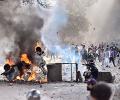
The hearing relates to a 1993 raid on a Mumbai bakery, which left 8 unarmed Muslims dead, none of whom had a criminal record. Justice Srikrishna had described the incident as 'not becoming of the police force of any civilised, democratic State.'

'It's still very early. I have just been handed over the matter and therefore I haven't formed any views on it as yet,' Justice B N Srikrishna tells Pavan Lall.
'We told the victims this was the only opportunity for them to get their story recorded.' 'If they did not recount their version the other side would concoct their own theory about what happened at Bhima-Koregaon.'
'The Babri Masjid wasn't just a mosque, it was a test of our secularism,' says Jyoti Punwani.
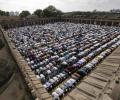
'One can understand this prejudice in the minds of policemen against Muslims, without accepting it. But what tilts the balance disproportionately is the police's blind eye to offences committed in the name of the majority.' says Jyoti Punwani.

Dhananjay Desai has been allowed to spread his poison to young men in Maharashtra and Goa over the last five years, by a 'secular' Congress-NCP government. The 23 cases pending against him have not stopped him. He and his supporters must have thought they were immune when they lynched a bearded Muslim at night. Neither Desai nor his followers, nor the police, nor their 'secular' political masters, must have expected the nationwide furore that followed, says Jyoti Punwani.
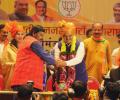
'There is a contradiction between what the then CM said in the assembly and the legislative council, and the direction taken by the police investigation.'
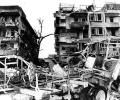
The various theories and statements about the culpability/innocence of 1993 blasts accused Yakub Memon present him with a Rashomon act, says Syed Firdaus Ashraf.

'Mumbai's killings in January 1993 came at the tail end of two outbursts of vicious communal violence, whereas today, it's peacetime in a 'new India'.' 'At that time, the perpetrators warned onlookers to keep their mouths shut.' 'Today, the perpetrators take videos of their attacks, such is their confidence.' 'The mobs have succeeded in terrorising an entire community and indeed, all those dealing in the transport of cattle, whatever their religion,' says Jyoti Punwani.

'Muslims and Dalits must erase the way they remember their past, or carry out their their performances in private,' says Jyoti Punwani, as Maharashtra's Censor Board denies permission to a play Jai Bhim, Jai Bharat.

'Little about this regime, given its vindictive credo, is a complete surprise. But we were still taken aback by the CBI raid as it was a complete abuse of due process.' 'These are not legal inquiries, but abusive use of State power. They are not legitimate investigations, but a witch-hunt.' 'Ours is a typical, classic case of the State and its organs being used as an outlet for motivated vendetta of the vilest kind.'
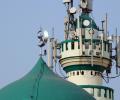
The RSS uses its resentment against mosques and loudspeakers to stoke anti-Muslim feelings among other Hindus, whenever it can, be it during riots, or before elections, says Jyoti Punwani.
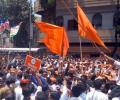
For it's not the Sena alone that indulges in hooliganism. 'Thokshahi', as the Sena proudly calls it, is the hallmark of the party and of its offshoots. But other parties haven't exactly been models of good behaviour. Not just Maharashtra, ministers and MLAs slapping officials everywhere in the country is not unheard of, says Jyoti Punwani.
Justice Lodha's attribution of guilt to the owners of teams, rather than to individuals, has laid out the law of command and responsibility, responsibility by virtue of ownership of shareholding, team membership and holding out to be the face of the team, says Indira Jaising.

'Make no mistake, legally Chanda Kochhar was not and still is not obliged to quit.' 'But quitting earlier would have placed her personally and as a leader on a very high pedestal, indeed where she belonged until this lapse,' says S Muralidharan, former managing director, BNP Paribas.
